The rebrand rollout: getting a new identity into the world on time
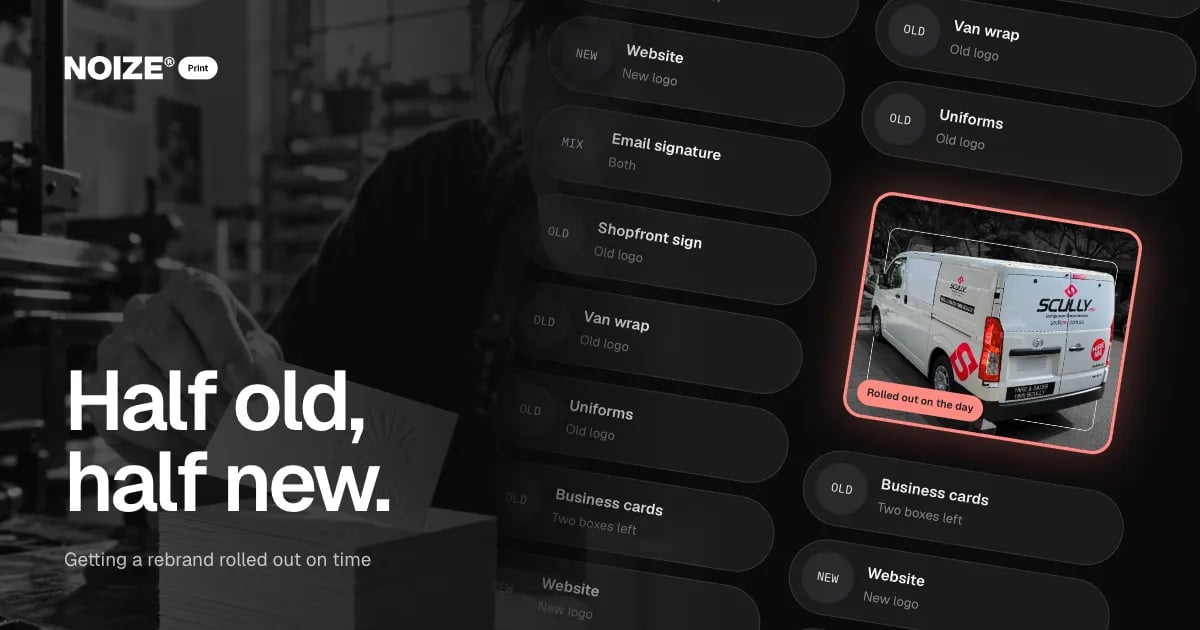
A rebrand is approved. The new logo goes live on the website the same afternoon. Then reality arrives. The shopfront sign takes six weeks. The van wrap is booked for next month. Uniforms have a minimum order and a lead time. There are two boxes of old business cards nobody wants to waste. The email signature shows both logos depending on who sends it.
For the next three months, customers see a business that looks half old and half new. That is often worse than either version, because it makes the business look disorganised at exactly the moment it is trying to look more established.
The short version
- A rebrand is only real once it is everywhere customers look.
- Build a full inventory, prioritise by visibility, prepare all artwork in one pass, schedule backwards from launch day, budget the whole rollout and switch as much as possible together.
- Creative, Print and Marketing planning as one avoids the half-old, half-new period.
The short version
A rebrand is only finished when it is everywhere customers look. Planning the rollout, with a full inventory of every touchpoint, a priority order, lead times and a launch date, avoids the half-old, half-new period. When Creative and Print plan together, artwork is prepared for every application in advance, production is scheduled backwards from launch day and the brand changes everywhere at once.
Why rollouts go wrong
01Nobody listed everything
Brands live in more places than anyone remembers: signage, vehicles, uniforms, stationery, packaging, forms, templates, social profiles, directory listings and email signatures.
02Lead times weren't planned
Large-format signage, vehicle wraps, embroidered uniforms and custom packaging all take weeks. Ordered after launch, they arrive late.
03Artwork wasn't ready
Each application needs specific artwork: sign dimensions, embroidery files, vehicle templates, packaging dielines. Preparing them one at a time adds weeks.
04Old stock got used up first
Using old cards and forms until they run out feels thrifty. It stretches the transition for months.
> I've been through rebrands where the website changed overnight and the vans changed eight months later. Customers asked if we'd been bought out. The second time, we planned the rollout backwards from one launch day, and the brand changed everywhere in a week.
How to plan a rollout
- 1. Build the inventory. List every place the brand appears, physical and digital, with quantities and locations.
- 2. Prioritise. Rank by customer visibility. Shopfronts, vehicles, website and customer-facing documents usually come first.
- 3. Prepare artwork in one pass. Creative produces every application file together, so production can start immediately.
- 4. Schedule backwards. Start from the launch date and work back through each item's lead time.
- 5. Budget the whole thing. Knowing the total rollout cost avoids stalling halfway.
- 6. Launch together. Switch as much as possible on the same day, then announce it. Marketing can turn the launch into a reason to talk to customers.
- 7. Retire the old. Collect and replace old stock and update every digital listing.
“The rebranding execution exceeded our expectations.”
An illustrative example
Imagine a trades business with eight vans, a showroom and a team of twenty in uniform. Planned backwards from a launch date, van wraps are booked in two batches, uniforms are ordered six weeks ahead, showroom signage is fabricated in advance and new stationery is printed ready to swap. On launch day the website, vans, signs and uniforms change together. Customers see a confident new brand, not a work in progress.
Creative, Print and Marketing together
At NOIZE, the rollout is planned by the departments that deliver it. Creative designs the brand and prepares the artwork. Print manages production and scheduling across every physical item. Marketing launches the new brand to an audience when everything is ready. One plan, one launch date.
Where to start this week
If a rebrand is coming, start the inventory now. Walk the premises, open the vehicles, check every template and digital profile and write down every place the brand appears. That list alone usually reveals twice as many items as expected, and it is the foundation of an on-time rollout. See print.noize.com.au and creative.noize.com.au.
Digital touchpoints count too
Physical items get most of the attention in a rollout, but digital touchpoints are just as visible. The website, social profiles, Google Business Profile, email signatures, invoice templates, directory listings and app icons all need updating on launch day. They are cheap to change and easy to forget, which is why they belong on the same inventory as the signs and vans.
Communicating the change
A rebrand is a reason to talk to customers. A short announcement explaining what has changed and why, a refreshed website and a launch campaign turn the rollout into marketing. Marketing plans the message and timing so the new brand arrives with momentum rather than quietly appearing.
After launch
Rollouts usually leave a tail: a sign at a satellite site, a supplier still using old files, a form nobody remembered. A short audit a month after launch catches the stragglers. Print and Creative work through the list until the old brand has gone from every place a customer might see it.
Questions to ask before you start
Ask how many places the brand appears. Ask which items have the longest lead times. Ask what the full rollout will cost. Ask who will approve each application. Ask which date everything should change on. The answers become the rollout plan.
Related reading
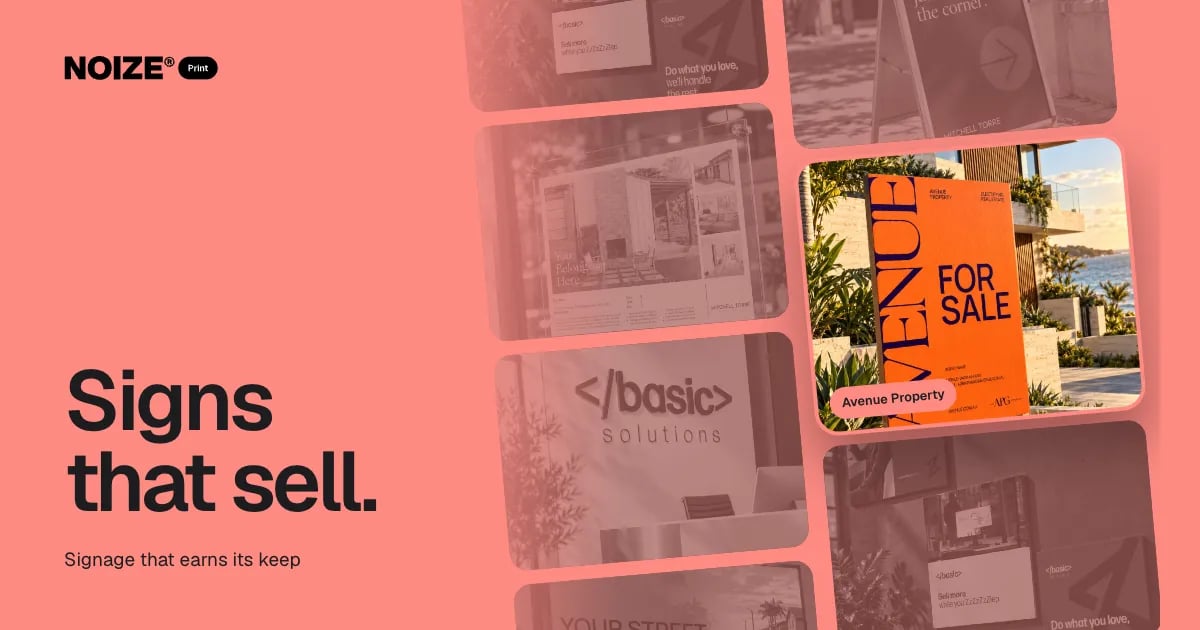
- Signage that earns its keep
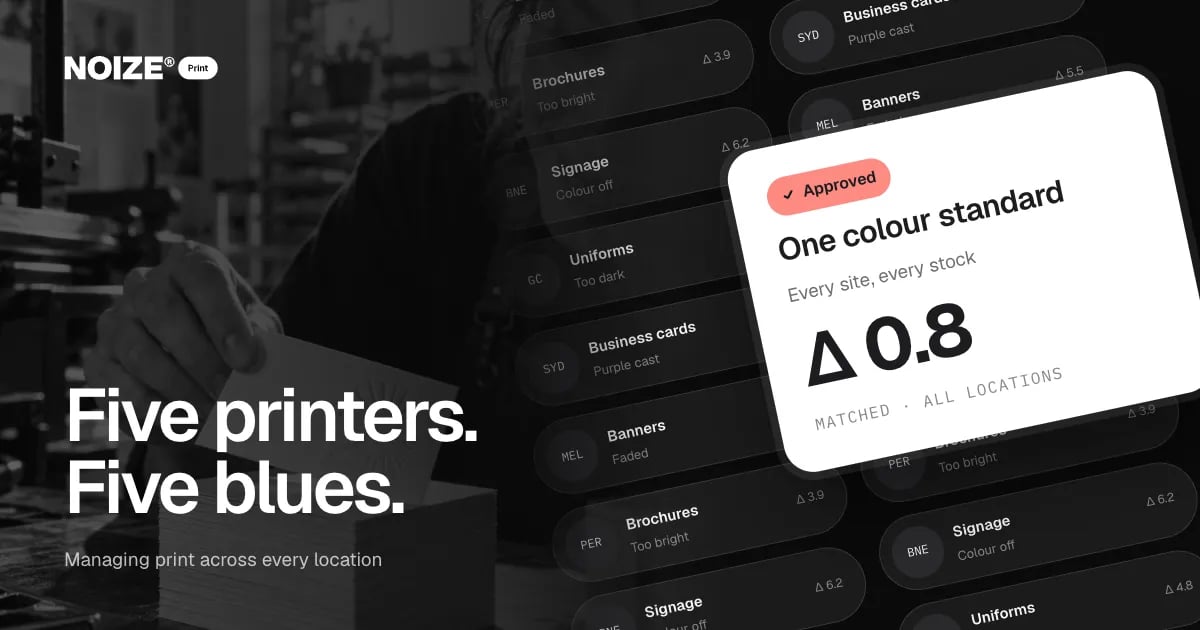
- Five suppliers, five colour matches: managing print across every location
Common questions
How long does a rebrand rollout take?
It depends on the number of locations and items. With planning, most physical changes can be timed to land around a single launch date.
What should be updated first in a rebrand?
The most visible customer touchpoints: shopfronts, vehicles, website and customer-facing documents.
Should we use up old stationery first?
Usually not. The cost of a few boxes is small compared with months of inconsistent branding.
Can you manage the whole rollout?
Yes. Creative, Print and Marketing plan and deliver it together.
How do we budget a rollout?
Start with a full inventory and get costs for every item before launch, so the rollout doesn't stall halfway.
How do we stop suppliers using the old logo?
Send every supplier the new master files on launch day, confirm receipt and ask them to remove the old artwork from their systems.
What is the most forgotten item in a rebrand rollout?
Usually digital listings and templates: Google Business Profile, directories, invoice and quote templates and email signatures. They are cheap to change and easy to miss.
Can the rollout be staged if budget is tight?
Yes, but stage it deliberately by visibility, and set dates for each stage so the transition doesn't drag on.
Who coordinates suppliers outside NOIZE?
We can coordinate with your other suppliers, supplying files and specifications so everything matches.
Should we soft-launch the new brand?
Usually a single, confident launch works better than a gradual change, as long as the key touchpoints are ready on the day.
Your first strategy conversation is on us.
Have a chatThe brand for business.