Signage that earns its keep
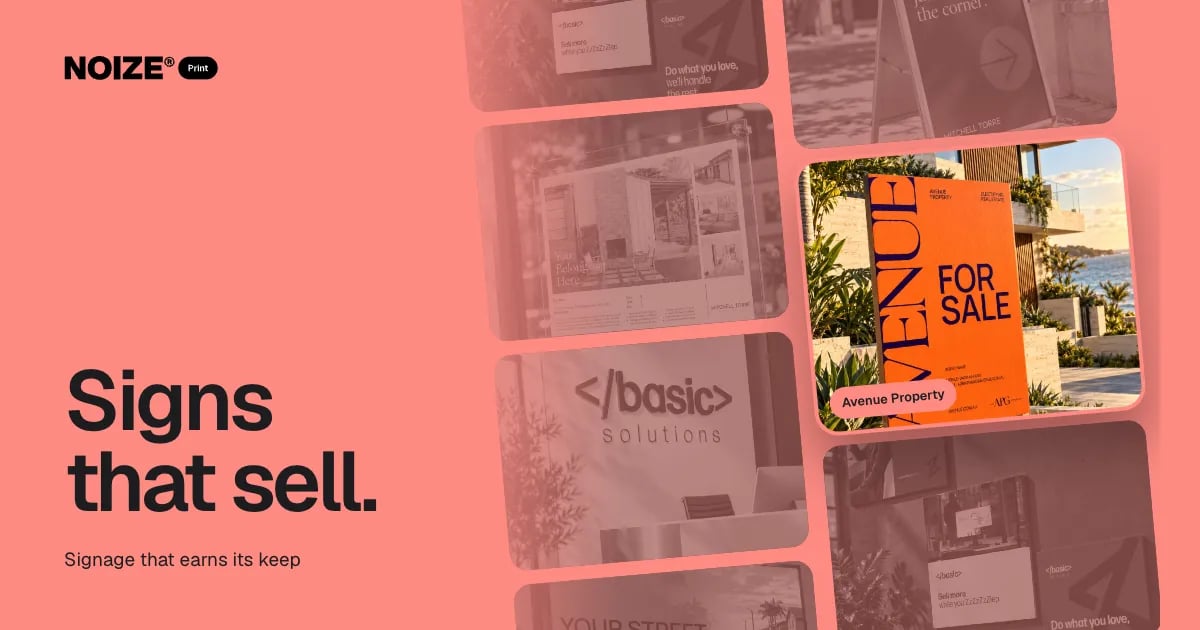
Every day, people walk and drive past your business. Some of them need what you sell. Whether they notice you, understand what you do and decide to come in often depends on one thing: the sign.
Signage is one of the hardest-working assets a business owns. It runs around the clock, for years, without a media budget. It is also one of the most neglected. Faded panels, an old logo, a cluttered window and a vehicle that still shows a previous phone number all work against the business every single day.
The short version
- Signage works around the clock for years, which makes it some of the most efficient marketing a business can buy.
- Good signs get noticed, say what you do, point the way and set expectations.
- Design for distance, keep it on brand, choose materials for the environment and maintain it.
The short version
Good signage gets noticed, tells people what you do and points them where to go. It is a one-off cost that works continuously, which makes it some of the most efficient marketing a business can buy. Signs earn their keep when they are clear at distance, consistent with the brand, made from the right materials for their environment and kept up to date. NOIZE Print handles signage and large-format work from design through installation-ready production.
What good signage does
01Gets noticed
The first job is attention. Contrast, scale and placement decide whether a sign registers in a busy streetscape.
02Says what you do
A logo alone rarely tells a passer-by what the business offers. Clear, short wording does.
03Points the way
Wayfinding signage helps customers find the entrance, the right floor, the parking or the reception. Confused customers turn around.
04Sets expectations
The quality of the sign suggests the quality of the business. A tired sign makes a fresh interior a surprise. A considered one invites people in.
> I've invested in businesses where the single best marketing spend in year one was the shopfront. It cost less than three months of ads, and it is still working. People forget how much passing traffic a good location gives you when the sign does its job.
Where signage pays back most
- Shopfronts. The front of the business, seen by every passer-by.
- Wayfinding. Inside and outside, guiding customers smoothly to where they need to be.
- Property signage. For real estate, boards are both a listing tool and a brand presence on every street.
- Vehicle graphics. Every trip becomes an impression, often in exactly the areas your customers live.
- Event and display. Banners, stands and pop-ups that make a business look established at shows and launches.
Getting it right
- Design for distance. Test legibility at the real viewing distance and speed. Short words, strong contrast, generous size.
- Keep it on brand. Signage should match the website, uniforms and vehicles exactly. NOIZE Creative prepares artwork with the signage application in mind.
- Choose materials for the environment. Sun, salt air and weather affect durability. The right substrate and finish keep signage looking sharp for longer.
- Plan maintenance. Faded or damaged signs cost more in lost impression than they save by waiting.
“We've had nothing but compliments and praise since making the change.”
An illustrative example
Picture a clinic on a busy road with a small, elegant sign set back from the street. It looks fine up close and is invisible from a passing car. Redesigned signage uses a larger panel facing traffic, a short line explaining the service and a clear entrance marker. New patient enquiries that mention "saw you from the road" start appearing within weeks. The building didn't change. The sign finally did its job.
Signage in a rebrand
Signage is usually the slowest and most expensive part of a rebrand to update, which is why it often lags behind. Planning it from the start, with Creative and Print working together, avoids months of old signs next to a new website.
Where to start this week
Walk or drive past your business as a customer would, from both directions. Note how far away you can read the sign, whether it says what you do and whether it matches the rest of the brand. Then do the same for your vehicles. See print.noize.com.au.
Interior signage and wayfinding
Signage doesn't stop at the front door. Inside, it guides customers, reinforces the brand and reduces the questions staff answer every day. Reception signs, directional signs, room and floor signs, window graphics and feature walls all shape how a space feels. In clinics, offices and venues, good wayfinding reduces confusion and makes the experience calmer.
Compliance and approvals
Some signage needs council or landlord approval, especially large external signs, illuminated signs and signs on heritage buildings or in shopping centres. Checking requirements early avoids delays and costly changes. Print can advise on common requirements and prepare drawings and specifications for approval.
Signage as part of the brand system
The best signage is designed as part of the brand system, not as a one-off. Consistent typography, colour and layout across every sign make a business feel organised and established, and make adding new signs simple. Creative and Print develop the system together, so every new location or sign follows the same rules.
Questions to ask before you start
Ask how far away your sign can be read. Ask whether it says what you do. Ask whether it matches your current brand. Ask how it looks at night and in strong sun. Ask when it was last cleaned or replaced. The answers show whether your signage is working or just present.
Related reading
- Five suppliers, five colour matches: managing print across every location
- The rebrand rollout: getting a new identity into the world on time
Common questions
How do I make my shopfront signage more effective?
Increase contrast and size, add a short line saying what you do and make sure it matches your current brand.
Are vehicle wraps worth it?
For businesses whose vehicles travel through their service area, they are often one of the most cost-effective forms of local advertising.
What materials last best outdoors?
It depends on exposure. We recommend substrates and finishes suited to sun, weather and coastal conditions.
Can you produce signage for multiple locations?
Yes, to one brand and colour standard across every site.
What do you need to quote signage?
Sizes, locations, quantities and the date you need it by, plus artwork if you have it.
Do I need council approval for my sign?
It depends on size, location, illumination and local rules. We recommend checking early, and Print can help prepare what approvals require.
How long does signage last?
It depends on materials, exposure and maintenance. Choosing substrates and finishes suited to the conditions, and cleaning regularly, keeps signage looking sharp for years.
Should signage include a phone number or website?
Only if it can be read at the viewing distance. For most shopfronts, the name and a short line about what you do matter more.
Can signage be updated without replacing everything?
Often, yes. Panels, vinyl and graphics can sometimes be replaced while keeping existing frames and structures.
Your first strategy conversation is on us.
Have a chatThe brand for business.