Why print still works when everything else is digital
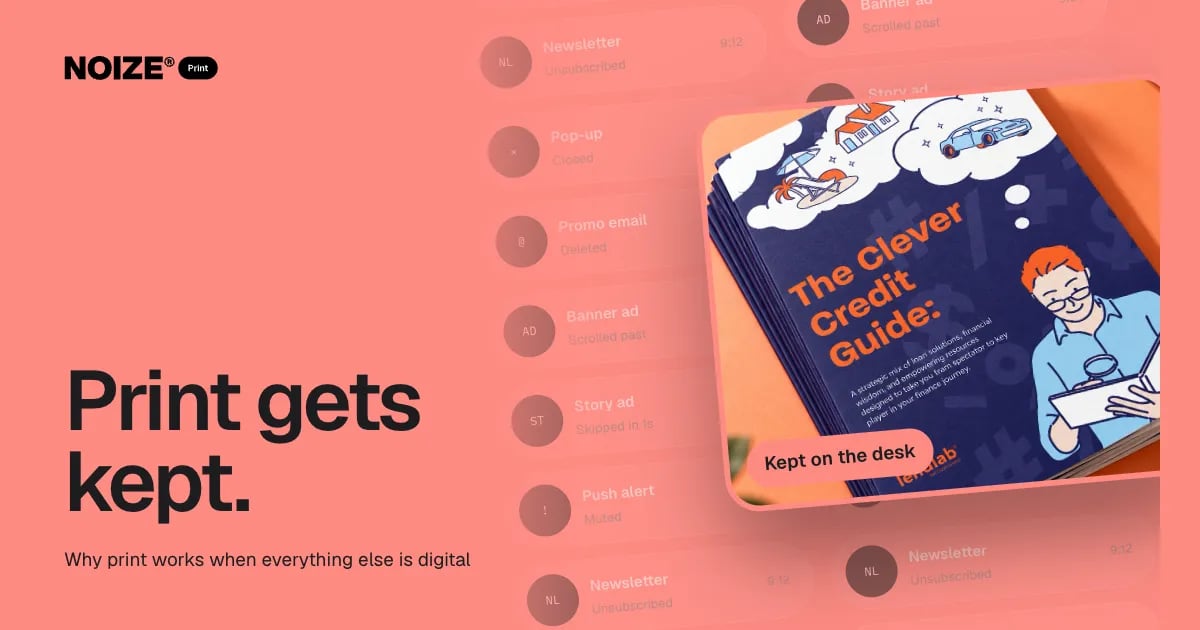
Count the digital messages you ignored today. The promotional emails deleted unread. The banner ads you scrolled past. The story ad skipped after one second. The push alerts muted, the newsletters unsubscribed from, the pop-ups closed. Most people dismiss hundreds of digital messages a day without a second thought.
Now think of the last printed piece you kept. A well-made brochure, a business card on good stock, a guide someone handed you at an event. It is probably still on a desk somewhere. That difference is why print still works.
The short version
- Print vs digital marketing is the wrong question. The best results come from using both together.
- Printed pieces are held, kept and passed on, which gives them a longer life and a stronger impression than most digital messages.
- Print works best for considered purchases, local businesses and physical products, and best of all when linked to digital with a measurable next step.
- Choose pieces that do a job a screen can't, and produce them well.
The short version
Print works because it is physical. It is held, kept and passed on in a way screen messages rarely are, which gives it a longer life and a stronger impression. It works best alongside digital, with a clear next step that can be measured. Businesses get the most from print when they choose the pieces that do a job digital can't, produce them well and link them to their marketing.
Why physical still matters
01It cuts through
Inboxes and feeds are crowded. A letterbox, a desk or a reception counter is not. A printed piece gets a moment of undivided attention that a digital message rarely does.
02It lasts
An ad is gone the moment it is scrolled past. A brochure sits on a table for weeks. A good card stays in a wallet. Print keeps working long after it is delivered.
03It builds trust
Physical materials signal investment and permanence. A business that prints well looks established. That matters most in high-value, considered purchases.
04It gets shared
People pass a useful guide to a colleague or leave a flyer on the fridge for a partner. Print travels through hands, reaching people the original recipient chooses.
> I've generated more than 100,000 leads, mostly through digital channels, and some of the best-converting campaigns still started with something printed. A well-designed guide handed over at the right moment did more than a month of retargeting.
Where print earns its place today
- Business cards and stationery. The moment a relationship starts. Quality here sets expectations for everything that follows.
- Brochures and guides. Ideal for considered purchases, where customers want to read, compare and share.
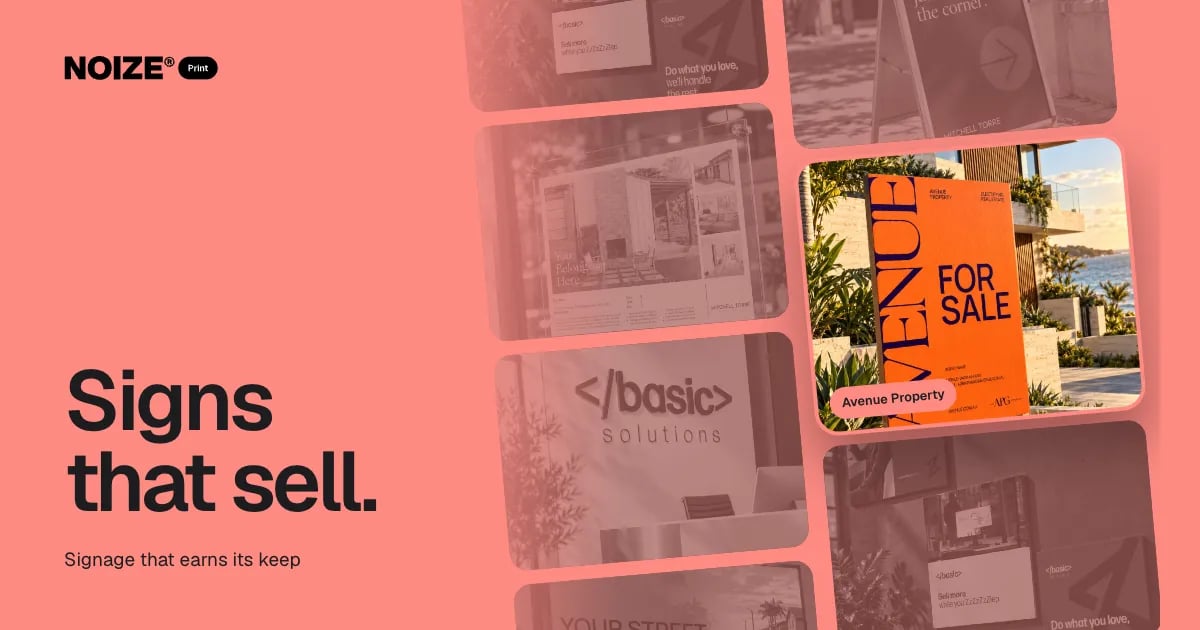
- Signage. Tells people where you are and what you do, every day, for years.
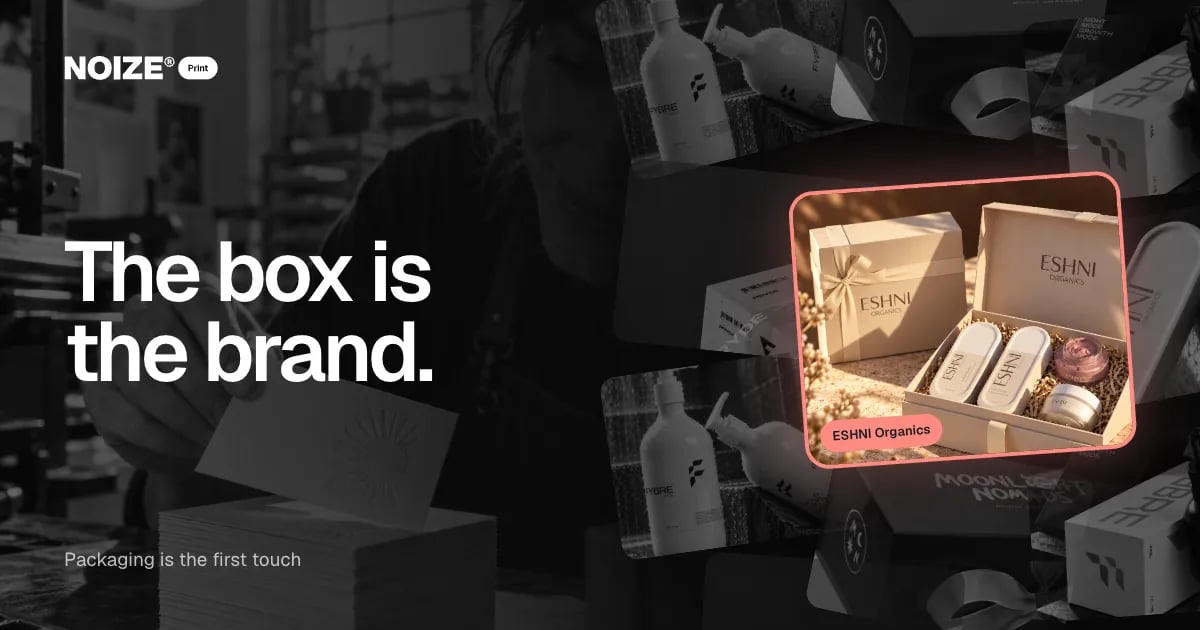
- Packaging. The first physical moment with a product.
- Direct mail. Lands in a less crowded channel and gets noticed when it is relevant and well made.
- Event collateral. Makes a stand look like a brand instead of a table.
Print works best with digital
The strongest campaigns use both. A brochure that sends readers to a landing page. A mail-out with a QR code that can be tracked. A poster that matches the ads people saw online. NOIZE Print works with Creative on the artwork and with Marketing on the measurement, so physical pieces become part of a campaign you can see results from.
“Exceeded our expectations in terms of quality, design and timeframe.”
An illustrative example
Imagine a lender competing for attention in a digital-heavy market. A short, well-designed credit guide, printed on good stock, gives brokers something useful to hand clients and keep on their desks. Each guide includes a simple link to a matching page. The guide becomes the piece people remember, and the link shows exactly how many readers acted on it.
Doing print well
Quality matters more in print than anywhere else, because people hold it. Thin stock, poor colour or a rushed layout undo the benefit. Good print starts with design built for the material, continues with proofs on real stock and ends with production managed to one standard. That is what NOIZE Print does, from approved artwork to delivery.
Where to start this week
List every printed piece the business uses and ask of each: does it do a job a screen can't, and does it have a clear next step? Keep the ones that do and improve their quality. Rethink or retire the rest. See print.noize.com.au.
How print and digital reinforce each other
Print and digital work on different parts of the customer's journey. Digital is excellent at reach, targeting and speed. Print is excellent at attention, trust and memory. Used together, each makes the other more effective. Someone who receives a well-made brochure is more likely to click the follow-up ad. Someone who has seen the ads is more likely to read the brochure when it arrives.
That is why NOIZE plans print inside the wider marketing plan rather than as a separate job. The printed piece, the landing page and the follow-up are designed as one sequence, so the business can see what each step contributes.
What makes a printed piece worth keeping
People keep printed material that is useful, beautiful or both. A guide that answers real questions. A price list they will need again. A card that feels good to hold. A calendar, a recipe, a checklist. Before printing anything, ask what would make someone keep it. If the honest answer is nothing, rethink the piece before spending on it.
Questions to ask before you start
Ask which printed pieces customers actually keep. Ask which ones have a clear next step. Ask how each piece is measured. Ask whether quality matches your price point. Ask which moments in the customer journey a screen can't handle well. The answers decide what deserves printing.
Related reading
- Packaging is the first time a customer touches your brand
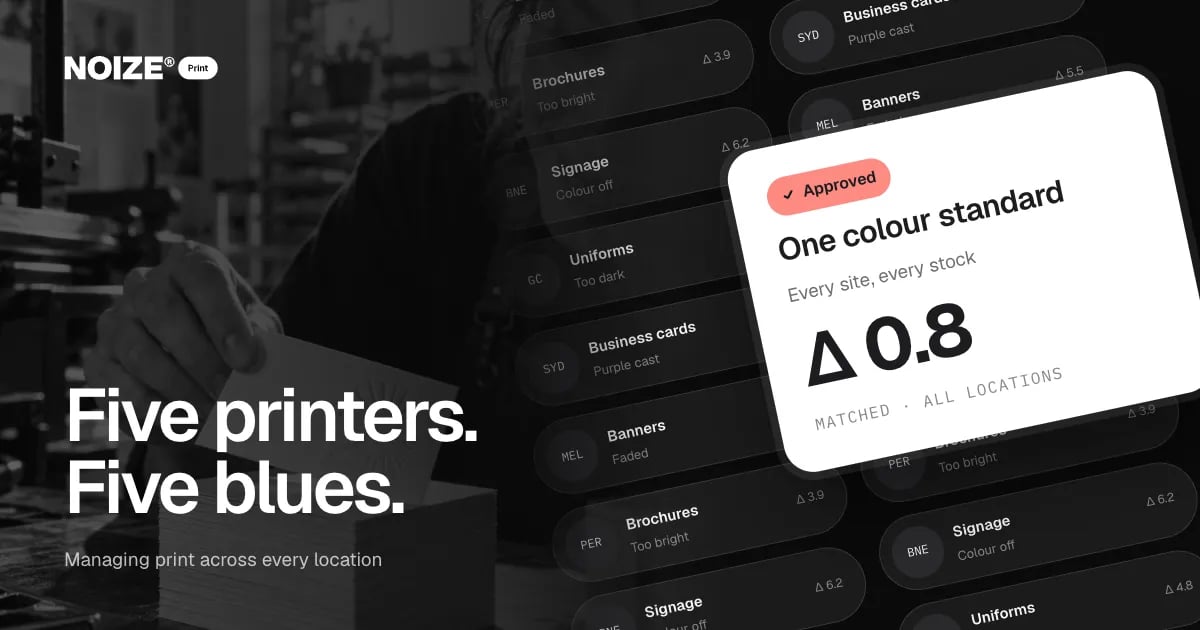
- Five suppliers, five colour matches: managing print across every location
Common questions
Is print marketing still effective?
Yes, particularly for considered purchases, local businesses and physical products, and especially when linked to digital follow-up.
How do I measure print marketing?
Use QR codes, unique offer codes, tracked phone numbers or dedicated landing pages, so responses can be counted.
What printed pieces are most worth investing in?
Usually business cards, signage, packaging and a core brochure or guide, depending on how customers buy.
Does print quality really matter?
It matters a great deal, because people hold and judge physical materials closely.
What do I need for a print quote?
The artwork, the quantities and the date you need it by.
How much should a business spend on print?
It depends on how customers buy. Businesses with physical locations, products or considered sales usually benefit from a steady investment in a few high-quality pieces rather than lots of cheap ones.
Which printed piece should a new business invest in first?
Usually business cards and a simple brochure or guide that explains what you do, followed by signage if you have a location customers visit. Each should be produced well, because first impressions in print are hard to change.
How do I make a brochure people actually keep?
Make it useful as well as attractive: answer real questions, include information they will need again and produce it on good stock with a clear next step.
Your first strategy conversation is on us.
Have a chatThe brand for business.