Packaging is the first time a customer touches your brand
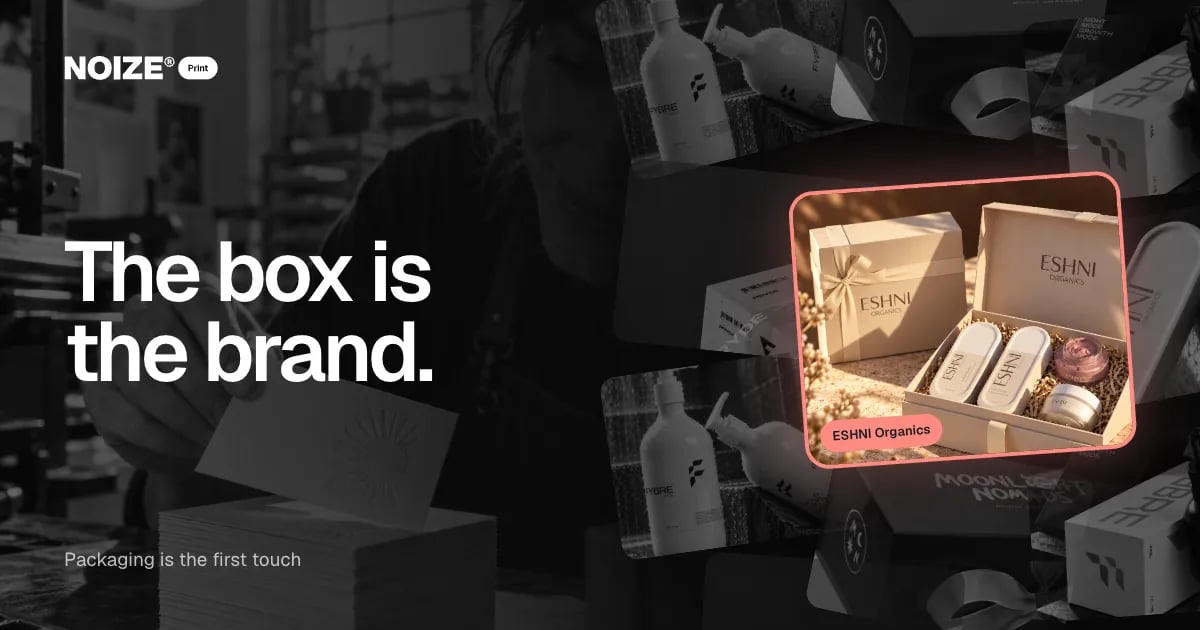
For a product business, the first physical contact with the brand doesn't happen in a shop or on a website. It happens when the box arrives. The customer picks it up, feels the weight, opens it and sees what is inside. In those few seconds they form an impression that the product then has to live up to.
Packaging is often treated as a container. It is really the first chapter of the product experience. Done well, it builds excitement, signals quality and gets photographed and shared. Done poorly, it makes even a great product feel ordinary.
The short version
- Packaging is the first time a customer physically meets your brand.
- Design the opening as a sequence, choose structure, materials and finishes to match the price point, keep it unmistakably on brand and make sure it is practical to produce and ship.
- Packaging people photograph and share becomes marketing you have already paid for.
The short version
Packaging is the first time a customer touches your brand. Design it for the moment of opening, not just the shelf. Choose structure, materials and finishes that match the price point, keep the brand consistent, and make it practical to produce and ship. Packaging people want to photograph becomes marketing you have already paid for. NOIZE Creative designs it and NOIZE Print produces it, so the design survives the real world.
Why packaging matters
01It sets expectations
Before the product is used, the packaging has told the customer what to expect. Considered packaging primes them to value what is inside.
02It justifies the price
A premium price in plain packaging creates doubt. Packaging that matches the price point reassures the customer they made the right choice.
03It gets shared
Unboxing is a moment people photograph and post. Packaging designed for that moment turns customers into free advertising.
04It is seen again
Packaging often stays in homes, on shelves and in bathrooms long after purchase. It keeps reminding customers of the brand.
> I've built ecommerce businesses where improving the unboxing did more for repeat orders than any email sequence. Customers remembered how it felt to open the box. That memory brought them back.
Designing the opening
- Think in sequence. What does the customer see first, second and third? The outer box, the first reveal, the product, the inserts. Each step can build anticipation.
- Choose structure deliberately. Rigid boxes, sleeves, tuck boxes, mailers and pouches all create different experiences and costs.
- Pick materials and finishes with purpose. Uncoated stocks feel natural. Soft-touch coatings feel premium. Foil and embossing add detail. Each should support the brand, not decorate it.
- Keep it consistent. Packaging should look unmistakably like the brand: the same colours, type and distinctive assets used everywhere else.
- Make it practical. It has to protect the product, survive shipping, fit the fulfilment process and be produced at a sensible cost. Beautiful packaging that crushes in transit isn't beautiful.
“A brand for us to stand behind and be proud of.”
An illustrative example
Picture an organic skincare brand shipping products in plain mailers. Customers like the formulas but rarely share them. Redesigned packaging introduces a branded outer box, a printed inner reveal with a short note from the founder and products presented in a fitted insert. The cost per order rises slightly. Unboxing posts appear without prompting, repeat orders increase and the product feels worth its price before it is even used.
Design and production together
Packaging is where design and manufacturing meet most closely. A beautiful concept can be expensive or impossible to produce. NOIZE Creative designs packaging with Print involved from the start, so materials, finishes, dielines and quantities are considered early. Print then manages production, proofs and reorders to one standard, so the hundredth run matches the first.
Where to start this week
Order your own product and open it as a customer would, on camera. Watch it back. Where does the experience feel considered, and where does it feel like an afterthought? Then open a competitor's. The gap is your brief. See print.noize.com.au and creative.noize.com.au.
Packaging for different channels
Retail packaging has to stand out on a shelf from a distance and explain the product in seconds. Ecommerce packaging has to survive courier handling and deliver a moment at the doorstep. Subscription and gift packaging needs to feel special every time. Many brands need more than one format, designed as a family so the brand stays consistent across all of them.
Inserts, notes and the small details
Some of the most effective packaging elements cost very little. A printed thank-you card from the founder. Care instructions that look like part of the brand. A small sample of another product. A sticker or seal that makes the opening feel deliberate. These details turn a delivery into an experience and give customers a reason to talk about it.
Planning production early
Packaging lead times are longer than most print. Structural samples, material choices, finishes and minimum quantities all need planning. Involving Print at the concept stage avoids designs that are too costly or slow to produce, and makes reorders straightforward once the packaging is approved.
Questions to ask before you start
Ask what customers see first when the box arrives. Ask how the packaging survives shipping. Ask whether it matches the price of the product. Ask what you want customers to photograph. Ask what quantities and lead times you can manage. The answers become the packaging brief.
Related reading
- Why print still works when everything else is digital
- Five suppliers, five colour matches: managing print across every location
Common questions
How much does custom packaging cost?
It depends on structure, materials, finishes and quantity. We help balance the experience you want with a sensible cost per unit.
What makes a good unboxing experience?
A considered sequence of reveals, materials that match the price point and consistent branding throughout.
Can you produce small runs of packaging?
Often, yes. Minimums vary by format and finish, and we advise on options for smaller quantities.
Do you design and print packaging?
Yes. NOIZE Creative designs it and NOIZE Print manages production.
How do I make packaging more sustainable?
Choose recyclable or recycled materials, reduce unnecessary components and right-size boxes. We can advise on options for your product.
How long does custom packaging take to produce?
Longer than standard print, especially for rigid boxes and special finishes. Planning early with Print avoids launch delays.
What is a dieline?
The flat template that shows how a box or package is cut, folded and glued. Designs are laid out on it so artwork lines up correctly when the packaging is assembled.
Should packaging change for each product?
Usually packaging works best as a family: a consistent structure and brand system with variations for each product, so the range looks connected on a shelf or doorstep.
Can packaging be updated without a full redesign?
Often, yes. Refining materials, finishes or the opening sequence can lift the experience while keeping the recognisable design.
Can packaging be personalised for each order?
Digital printing makes short runs and personalisation possible for many formats. We can advise what suits your volumes and budget.
Your first strategy conversation is on us.
Have a chatThe brand for business.